
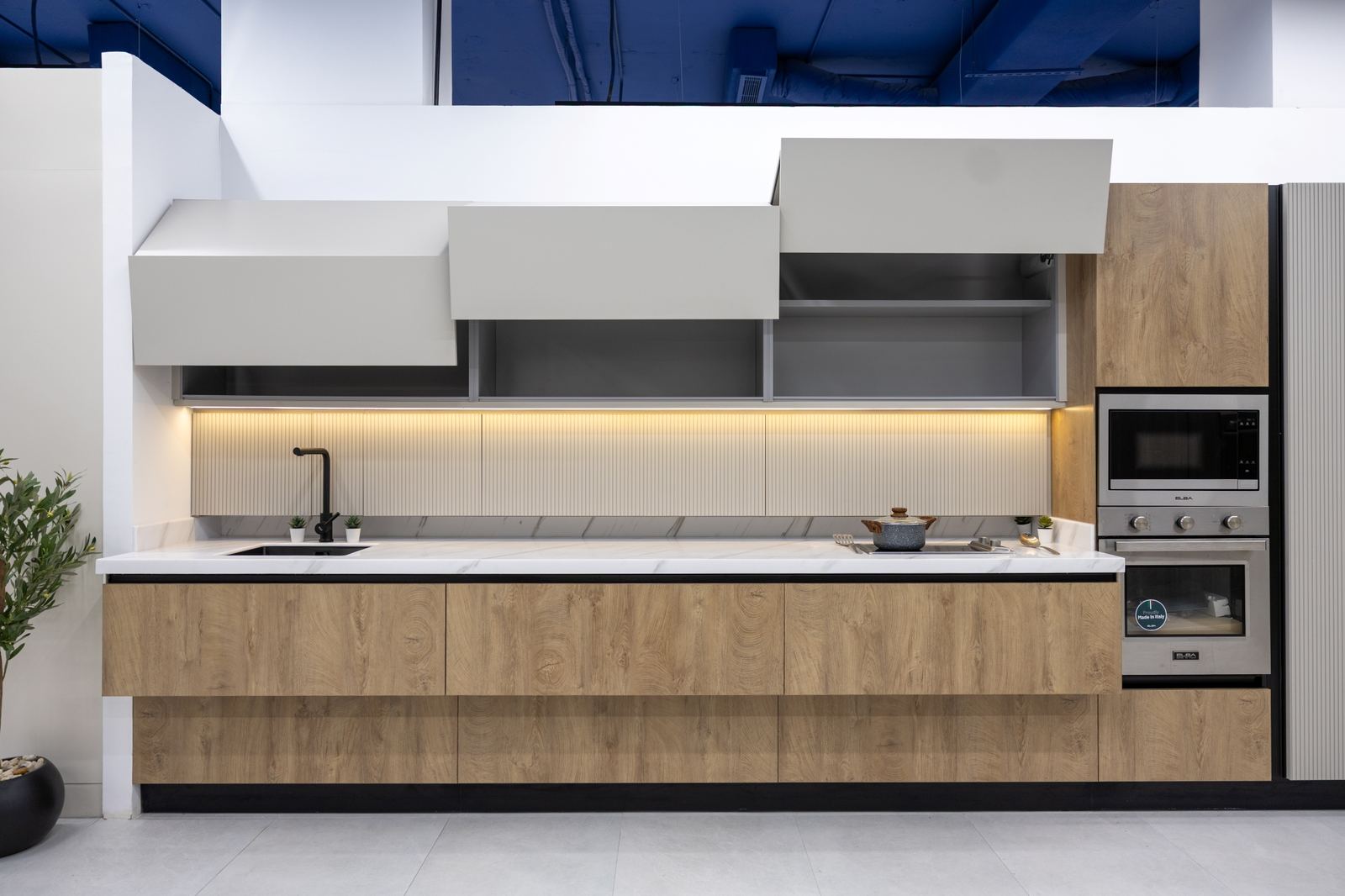
Smart hinges and hydraulic motion systems in a Nano aluminum kitchen

When planning a custom kitchen, most of the focus goes toward selecting the cabinet color or the countertop material. While aesthetics are important, what actually dictates the lifespan and comfort of your kitchen are the small, hidden hardware pieces: hinges, drawer slides, and overhead door lift systems. The kitchen is the most demanding environment in a home; cabinet doors and drawers are opened thousands of times a year under heavy loads, amid fluctuating heat and humidity.

Most consumer information online focuses on the marketing aspects of hardware without detailing their engineering specifications or quality standards. This technical guide explains the mechanical principles you must understand to choose the best motion systems for your kitchen cabinets, with a focus on mounting requirements in custom metal cabinet structures.

Quick Summary: How to Ensure the Best Motion Performance?

Never compromise on internal hardware. Look for motion systems with documented load ratings, clear technical data, and recognized durability and corrosion-resistance testing. Use wide-opening hinges (155° or more) for internal pull-out drawers, and under-mount drawer slides rated for 50-70 kg for heavy pots and pans. Most importantly, ensure that the cabinet chassis is engineered for metal-to-metal mounting to prevent screws from loosening over time.

1. Hinge Geometry & Opening Angles

A hinge is not just a connector; it is a mechanical linkage that dictates the door's swing path and clear opening space. Hinges are available in different opening angles to suit specific layout requirements:

  • Standard Hinges (110° Hinge): The most common choice for regular upper and lower cabinet doors. They open wide enough to provide full access to standard shelving.
  • Wide-Angle Hinges (155° to 170° Zero-Protrusion Hinge): Often referred to as zero-protrusion hinges. When fully open, the door swings completely clear of the cabinet opening. This is essential for internal pull-out drawers (drawers behind a hinged door) so the drawers can slide out without scraping the door's inner face.
  • Integrated Hydraulic Hinges (Soft-Close): These feature a hydraulic damper built directly into the hinge cup itself rather than as an external clip-on accessory. This ensures that doors close slowly and silently, protecting the cabinet structure from the impact of repeated slamming.

2. Drawer Slide Physics: Under-Mount vs. Side-Mount

Modern drawer design requires understanding the difference between slide designs and where they are mounted, which directly affects load capacity and aesthetics:

  • Under-Mount Slides: Mounted directly beneath the drawer box, making them completely invisible when the drawer is open. Under-mount slides distribute the load across the drawer base rather than the sides, protect the mechanical gears from falling crumbs or spices, and support full-extension for complete visibility.
  • Traditional Side-Mount Slides: Mounted on the sides of the drawer box, remaining visible when open. They consume about 2.5 cm of the drawer's internal width and are exposed to dust and spills, which can clog the ball-bearing tracks and cause rough movement over time.

3. Mechanical Load Classes for Drawer Runners (Load Ratings)

When configuring your kitchen cabinets at Nano, drawer weight ratings must be planned according to what will be stored:

Load Class Standard Weight Capacity Ideal Application Recommended Technical Specs
Light-Duty (Standard) Up to 30 kg Cutlery, utensils, kitchen towels, and light plastic containers. Standard partial or full-extension runners with integrated hydraulic dampening.
Heavy-Duty 50 kg Pots, pans, heavy ceramic dishware, and heavy small appliances. Under-mount full-extension slides with reinforced bottom steel brackets.
Ultra-Heavy Duty 65 to 70 kg Bulk pantry storage (rice/flour sacks), bottled water, and tall pull-out larder units. Double hydraulic runners with synchronizing gear bars to prevent drawer twisting.

4. Overhead Cabinet Lift Systems

In modern kitchen architecture, traditional swing doors on wall cabinets are increasingly replaced by vertical lift-up mechanisms. This provides significant ergonomic benefits by lifting the door entirely out of the user's path, preventing accidental head injuries. The primary systems include:

  • Bi-Fold Lift Systems: Split a wide door into two panels that fold upward together. Ideal for large, high wall cabinets.
  • Up-and-Over / Parallel Lift Systems: Lift the door parallel to the cabinet front or slide it straight up above the cabinet crown. Ideal for housing built-in appliances like microwaves.
  • Stay Lifts: Swing a single-panel door straight up. Perfect for smaller top cabinets or space-restricted areas above refrigerators.

5. Dampening & Assist Technologies: Soft-Close, Push-to-Open, & Electronic Assist

Modern kitchen hardware offers various mechanical and electronic assist mechanisms to customize cabinet interaction:

  • Soft-Close: Uses hydraulic or gas-filled chambers to absorb the door or drawer's closing speed in the final 5 cm, ensuring a silent close even if pushed with force.
  • Push-to-Open: Designed for handle-less kitchens. A light press on the door or drawer front releases a spring-loaded latch, opening it far enough to pull open.
  • Electronic Assist: Integrates a small electric drive unit behind the drawer or waste bin drawer. A gentle touch on the front signals the motor to push the drawer fully open, which is convenient for under-sink trash bins when your hands are full.

6. Mounting Hardware in Aluminum Cabinets to Prevent Structural Sag

One of the main challenges in custom aluminum cabinet manufacturing is how to mount steel hinges and slides securely to metal frames without causing "screw stripping" over time. Standard wood screws are unsuitable for aluminum and will eventually wobble, leading to saggy doors and misaligned drawers.

At Nano, we address this challenge through advanced metal joinery. We engineer our aluminum profiles with double-thickness reinforcement at all hardware mounting points and use specialized machine screws (Threaded Steel Inserts) rather than cheap sheet-metal screws. This ensures that the hinges remain perfectly rigid, preventing door sag and structural misalignment over the entire life of the kitchen.

7. Quality Standards & Certifications for Kitchen Motion Hardware

When selecting hardware for your kitchen, check for compliance with these international standards:

  • DIN EN 15570: The European standard testing the strength and durability of hinges. Premium hinges must undergo and pass testing for 80,000 to 200,000 opening cycles under full load without degradation.
  • ISO 9227 (Salt Spray Test): A chemical test evaluating the corrosion resistance of metal hardware. In coastal Saudi cities like Khobar, Dammam, and Jeddah, humidity and atmospheric salinity accelerate rust. Nano utilizes hardware treated with electromagnetic plating that passes 48+ hours of salt spray testing without oxidation.

8. How to Verify Hardware Quality in a Showroom

When visiting a kitchen showroom, use these simple tests to verify the quality of the hardware yourself:

  1. Load Flex Test: Pull a large drawer out fully and apply gentle downward pressure on the front edge. High-quality slides will not bend or twist sideways.
  2. Dampening Test: Push a drawer closed with moderate force; it should slow down smoothly and close in near-silence without metallic clanging.
  3. Lateral Stability Test: Pull a drawer out and gently shake it side-to-side; synchronized drawer runners will slide in a straight line without excessive play.
  4. Technical Data Check: Look for permanent manufacturing data or a technical code on the hinge or runner, and ask the supplier to explain load rating, warranty, and testing standards.

9. Visit Our Showrooms and Schedule Your Design Consultation

At Nano Kitchens, we focus on reliable motion systems mounted inside aluminum chassis designed for daily use. You can experience these systems firsthand at our showrooms in:

Schedule a technical design consultation and home measurement visit via our Appointment Booking Page to plan your kitchen hardware configuration with our engineering team.

Frequently Asked Questions

What makes a kitchen hinge good?

A good hinge has a clear opening angle, suitable door weight rating, integrated dampening, and corrosion resistance. It also needs to be mounted to a cabinet structure that prevents screw loosening with daily use.

Can standard hinges be replaced with soft-close hinges?

Yes, standard hinges can be replaced with hydraulic soft-close hinges, provided the door has the standard 35 mm cup drilling and you use screws compatible with the door and cabinet structure.

What causes kitchen cabinet doors to sag?

Cabinet door sag is typically caused by screws loosening in weak cabinet structures or using too few hinges for heavy doors.

How can I tell if a drawer slide is high quality?

High-quality slides include clear manufacturing data, move smoothly without grinding noises, and provide documented load rating, warranty, and installation requirements.