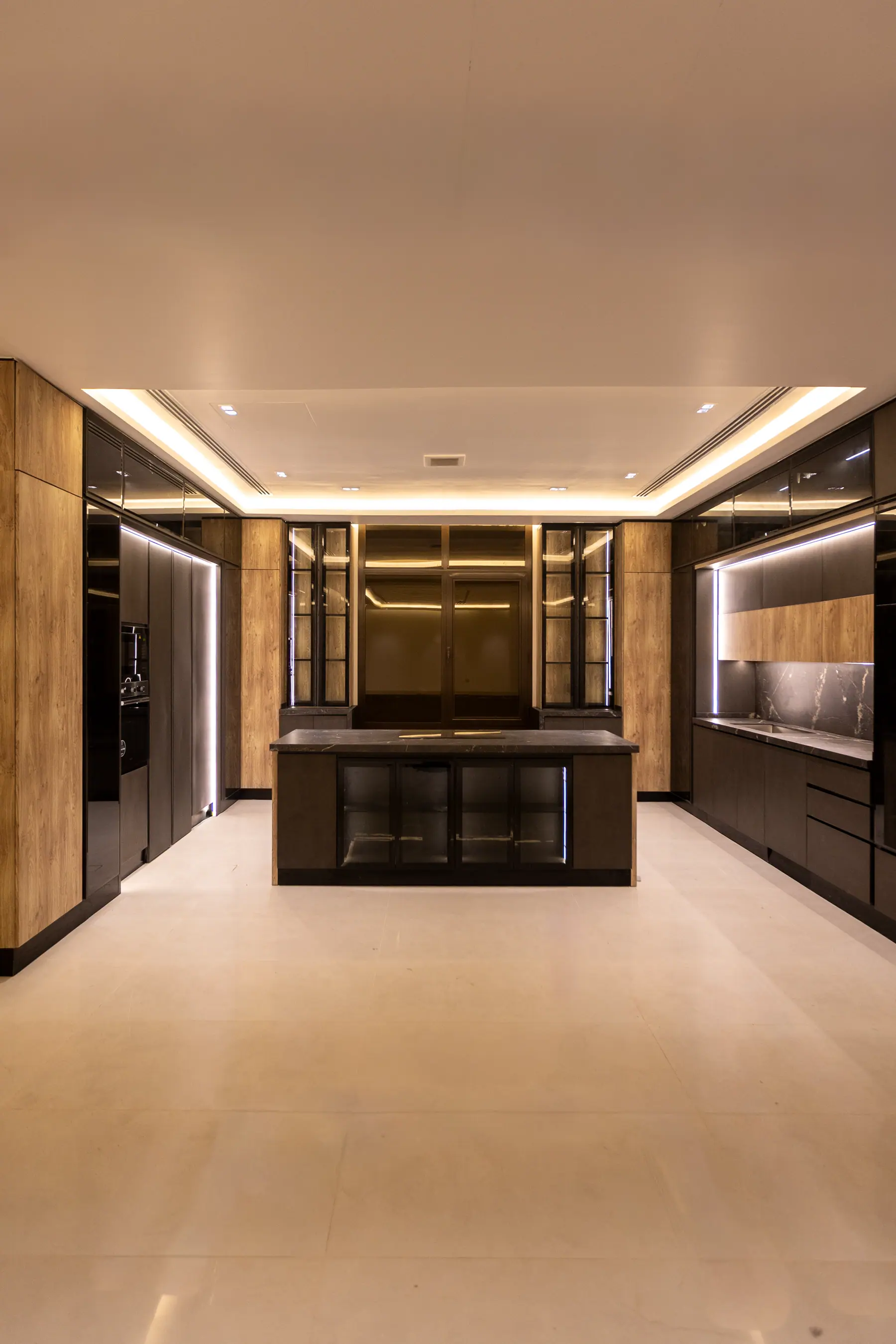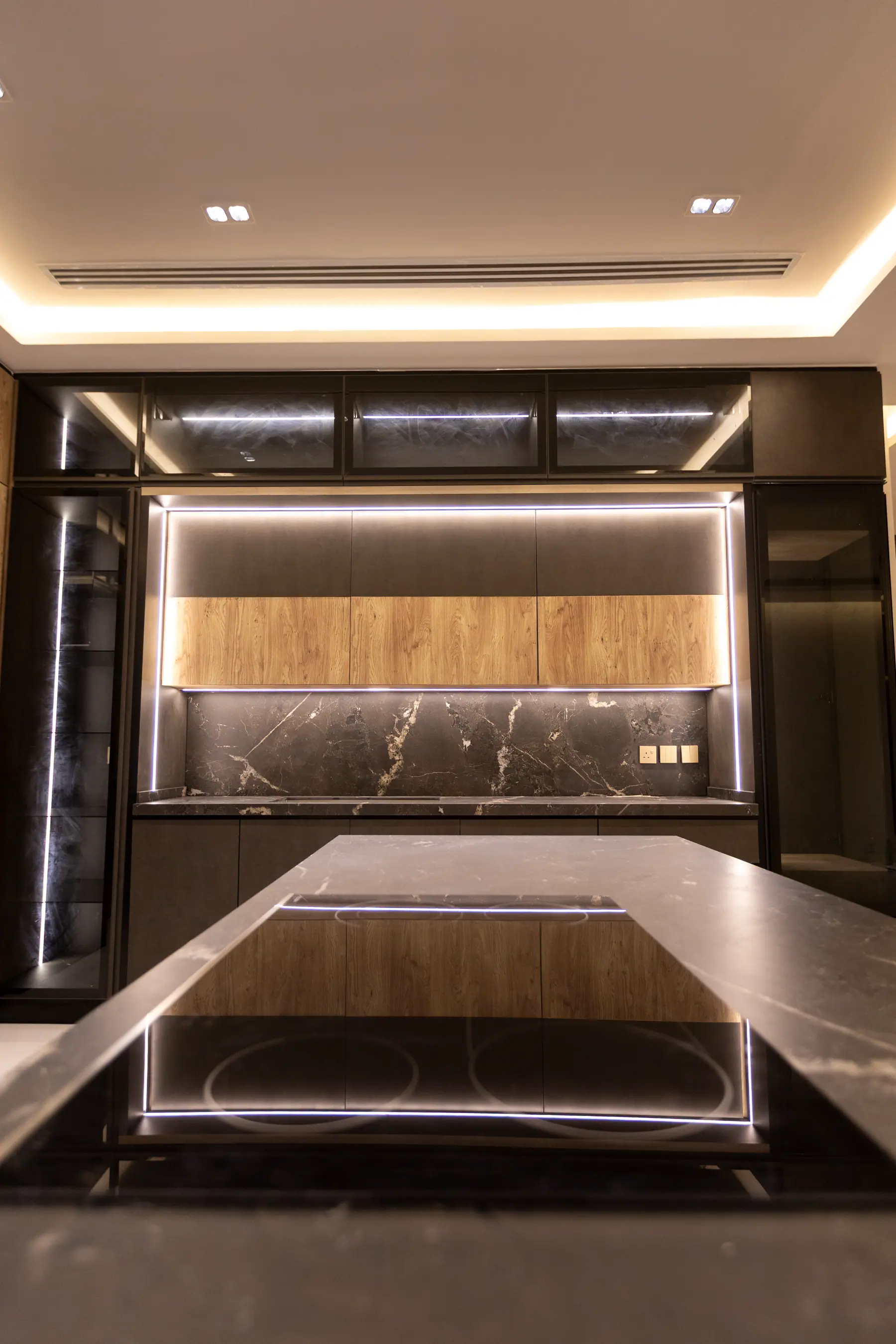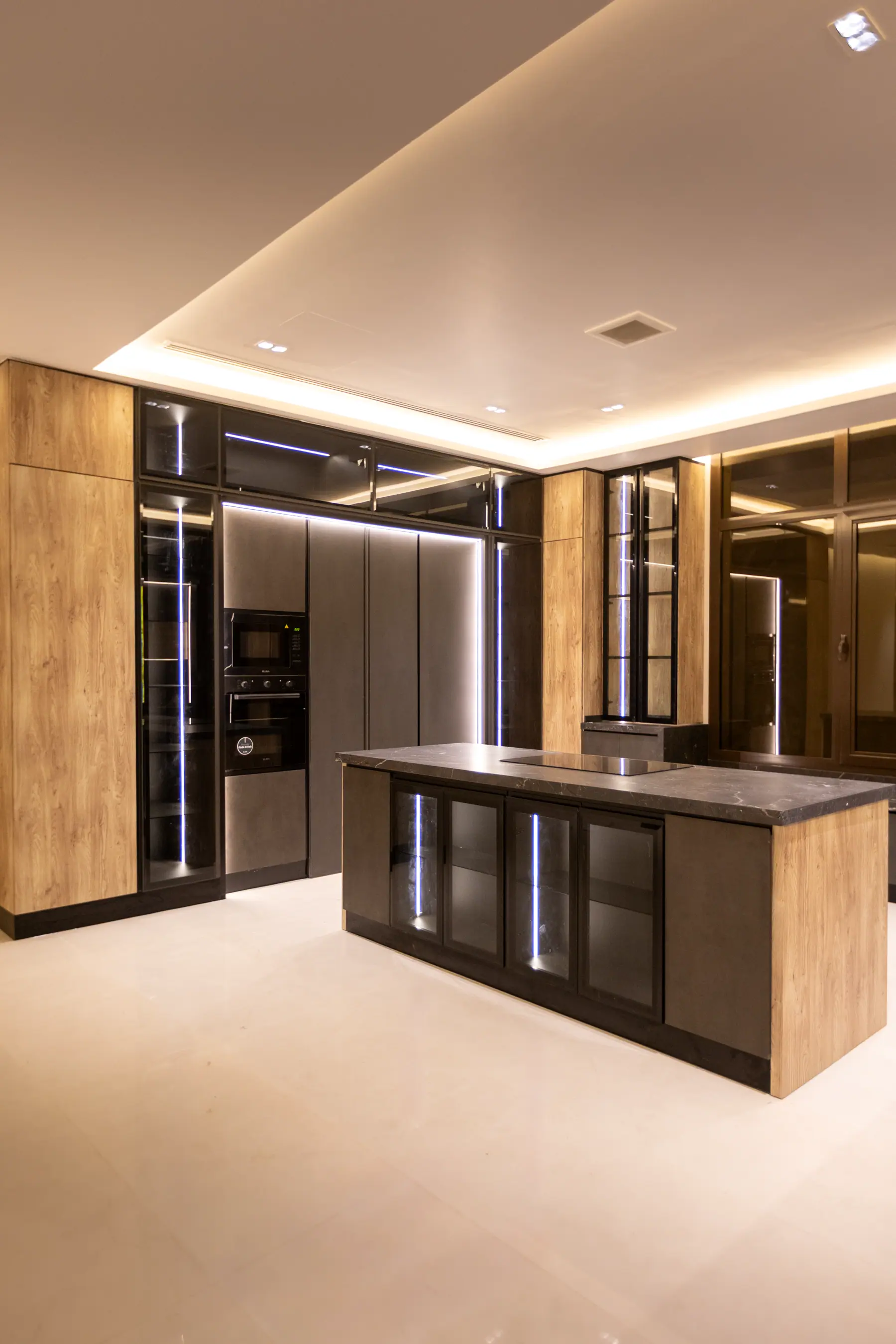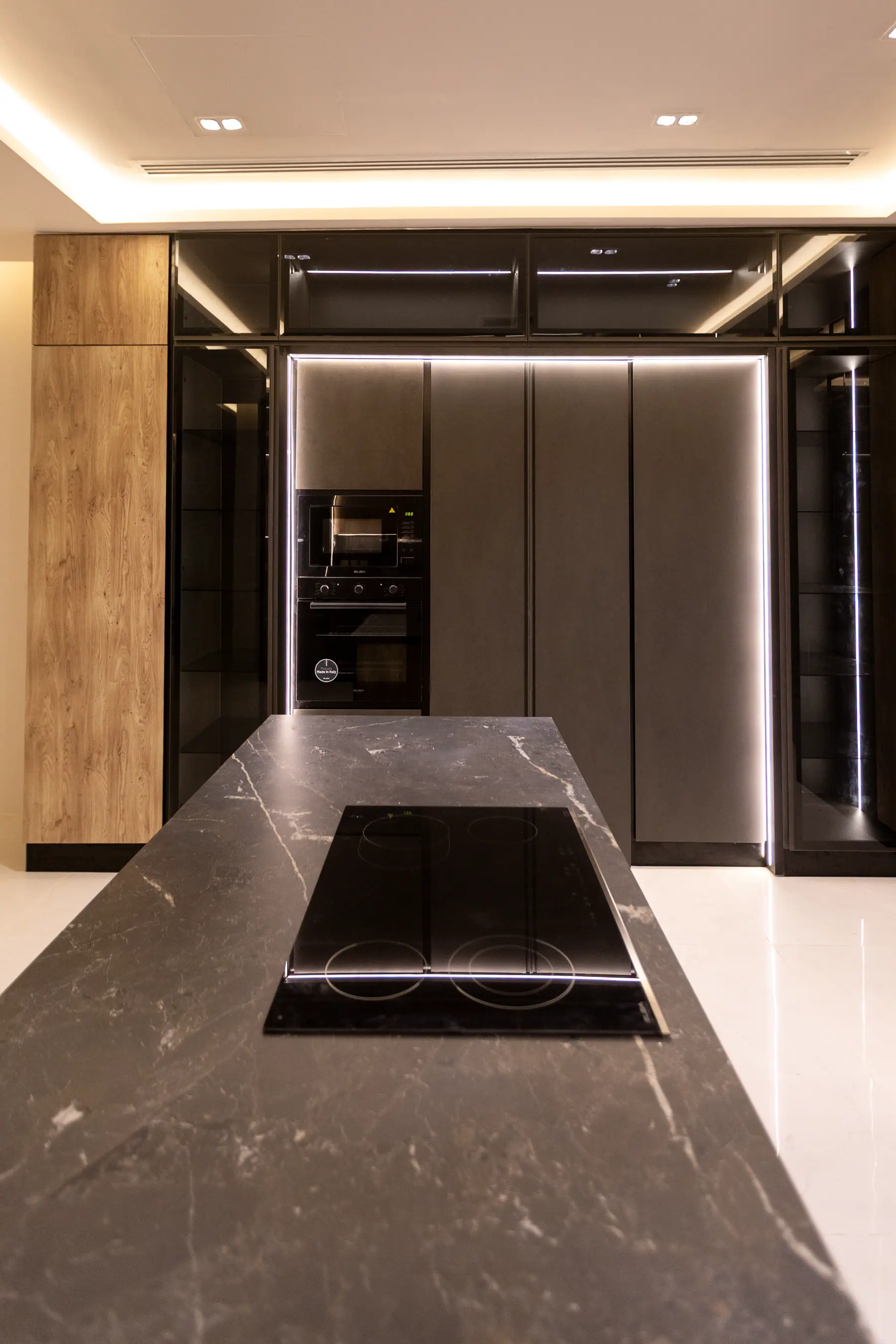
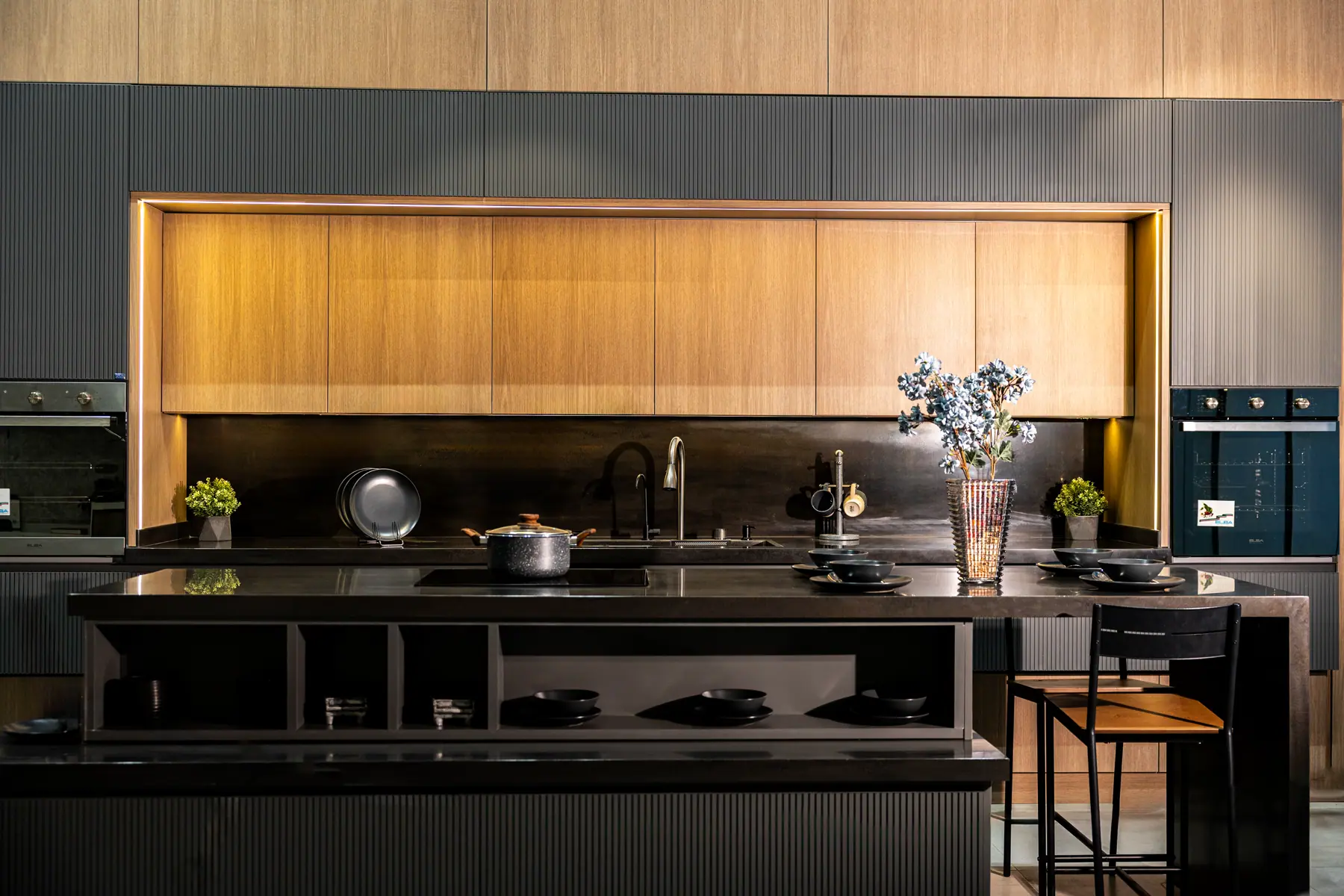
Short answer: does your kitchen fit an island?
An island works when you keep at least 90 cm of walkway on every side and at least 107 cm of work aisle between the island and the sink, hob or refrigerator run (122 cm if two people cook together). In practice, a 90 cm deep island facing one run of cabinets needs a room about 3.5 m wide; between two runs it needs about 4.2 m. In a narrower room, a peninsula or an L-shaped layout usually works better.
Kitchen island dimensions table
| Item | Guideline | Note |
|---|---|---|
| Walkway around the island | At least 90 cm | For passing only, no appliance doors |
| Work aisle (one cook) | At least 107 cm | Between the island and the sink, hob or fridge |
| Work aisle (two cooks) | At least 122 cm | Kitchens used by more than one person |
| Island worktop height | About 90 cm | Same as a standard worktop |
| Bar-height island | 105–107 cm | Needs taller bar stools |
| Width per seat | 60 cm per person | A 180 cm island seats three |
| Knee-space overhang (90 cm height) | About 38 cm | 30 cm at bar height, 46 cm at 76 cm table height |
| Clearance behind seats | 90 cm with no traffic, 110 cm to edge past, 150 cm for a walkway | Measure from the counter edge to the wall or obstacle |
| Island depth | 60 cm storage only, 90–100 cm with seating, 100–120 cm with sink or hob plus seating | Depth decides the drawer layout on each side |
| Minimum practical length | 120 cm; 180–240 cm is common | Beyond 270 cm the work path gets long |
| Landing space beside an island hob | At least 30 cm each side | Plus space behind, and an island hood |
| Landing space beside an island sink | 60 cm one side, 45 cm the other | For dishes before and after washing |
These figures are guidelines from widely used kitchen planning guidance (NKBA Kitchen Planning Guidelines), converted to centimeters. Final dimensions are set after measuring your site and confirming appliance sizes.
Worked example: is your kitchen wide enough?
A kitchen 380 cm wide with one run of 60 cm deep cabinets:
- Wall cabinets: 60 cm.
- Work aisle in front of the sink and hob: 107 cm.
- 90 cm deep island with seating: 90 cm.
- Clearance behind the stools: 110 cm.
Total 367 cm, so the island fits with 13 cm to spare. At 330 cm wide, reduce the island to 60 cm deep without seating, or switch to a peninsula attached to one wall.
What is the island for?
- Prep and storage: deep pot drawers on the work side, shallow cabinets on the other.
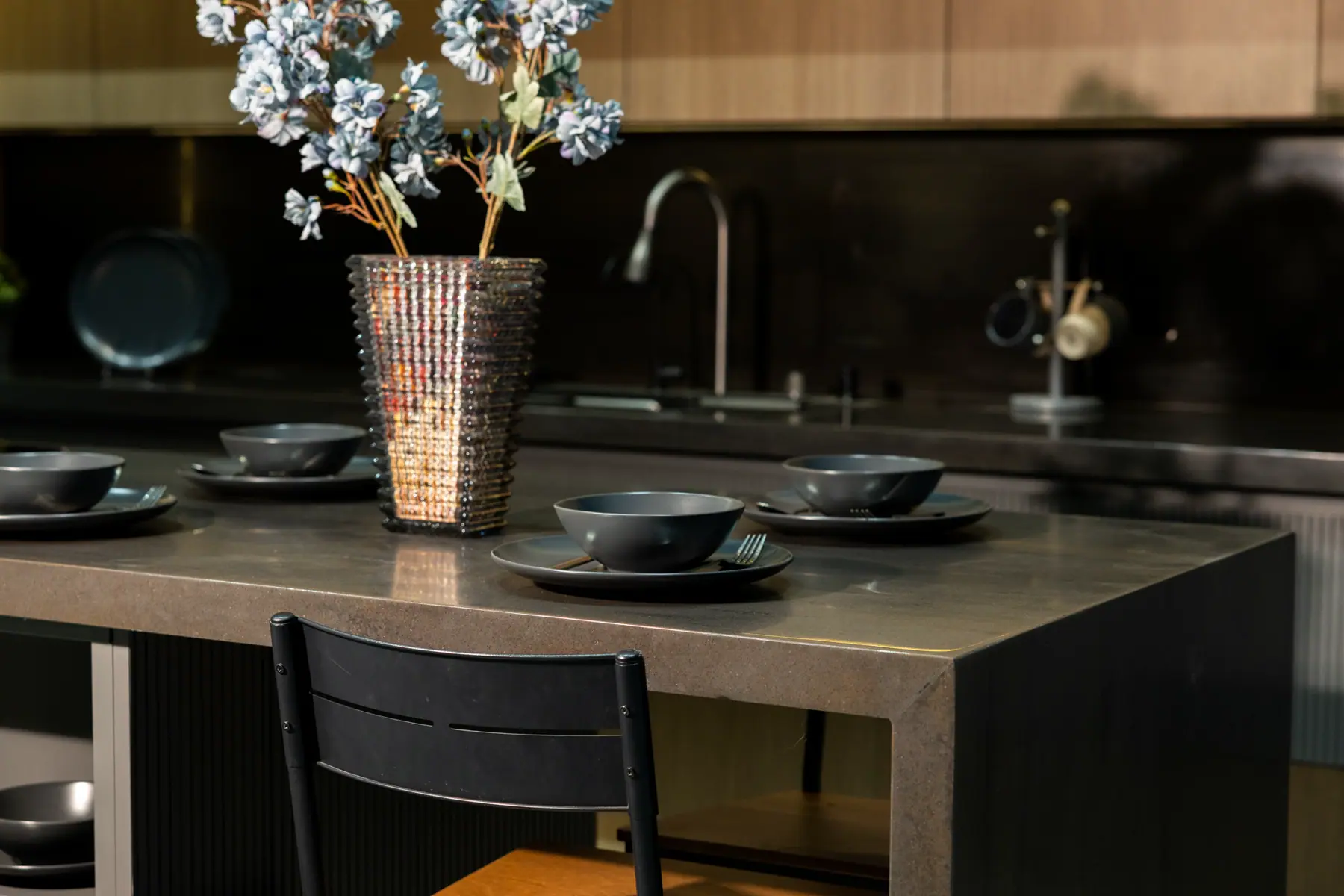
- Breakfast seating: overhang per the table above and a power outlet for small appliances.
- Sink in the island: floor drainage planned before tiling, landing space and a waste bin.
- Hob in the island: a ceiling-mounted island hood, at least 30 cm around the hob and protection on the seating side.
Island, peninsula or no island?
| Option | Works when | Approximate minimum room width |
|---|---|---|
| Freestanding island with seating | There is circulation on all sides and a clear job | 350–380 cm with one cabinet run |
| Storage island without seating | You need extra prep space in a medium kitchen | About 320 cm |
| Peninsula | No room for a fourth walkway | Less than an island, one side is attached |
| No island | The room is narrow or has many doors | Use an L or U layout instead |
Common island mistakes
- Aisles under 90 cm: an open dishwasher door (about 60 cm) or oven blocks the path.
- An oversized island: you walk around it between the sink and the fridge.
- Seating without enough overhang: knees hit the cabinets and diners sit far from the top.
- An island hob without a proper hood: steam and grease spread into the open space.
- Late floor services: power and drainage in the island must be set before tiling.
Kitchen island FAQs
What is the minimum kitchen size for an island?
As a rule of thumb, about 3.5 m of room width for a 90 cm deep island facing one cabinet run, and about 4.2 m between two runs.
How tall is a kitchen island?
Usually 90 cm like the worktop, or 105–107 cm for bar-height seating.
How many stools fit at an island?
Allow 60 cm per stool: a 180 cm island seats three and a 240 cm island seats four.
Can the sink or hob go in the island?
Yes, if drainage or power is planned before tiling, landing space is kept on both sides and an island hood is fitted over a hob.