
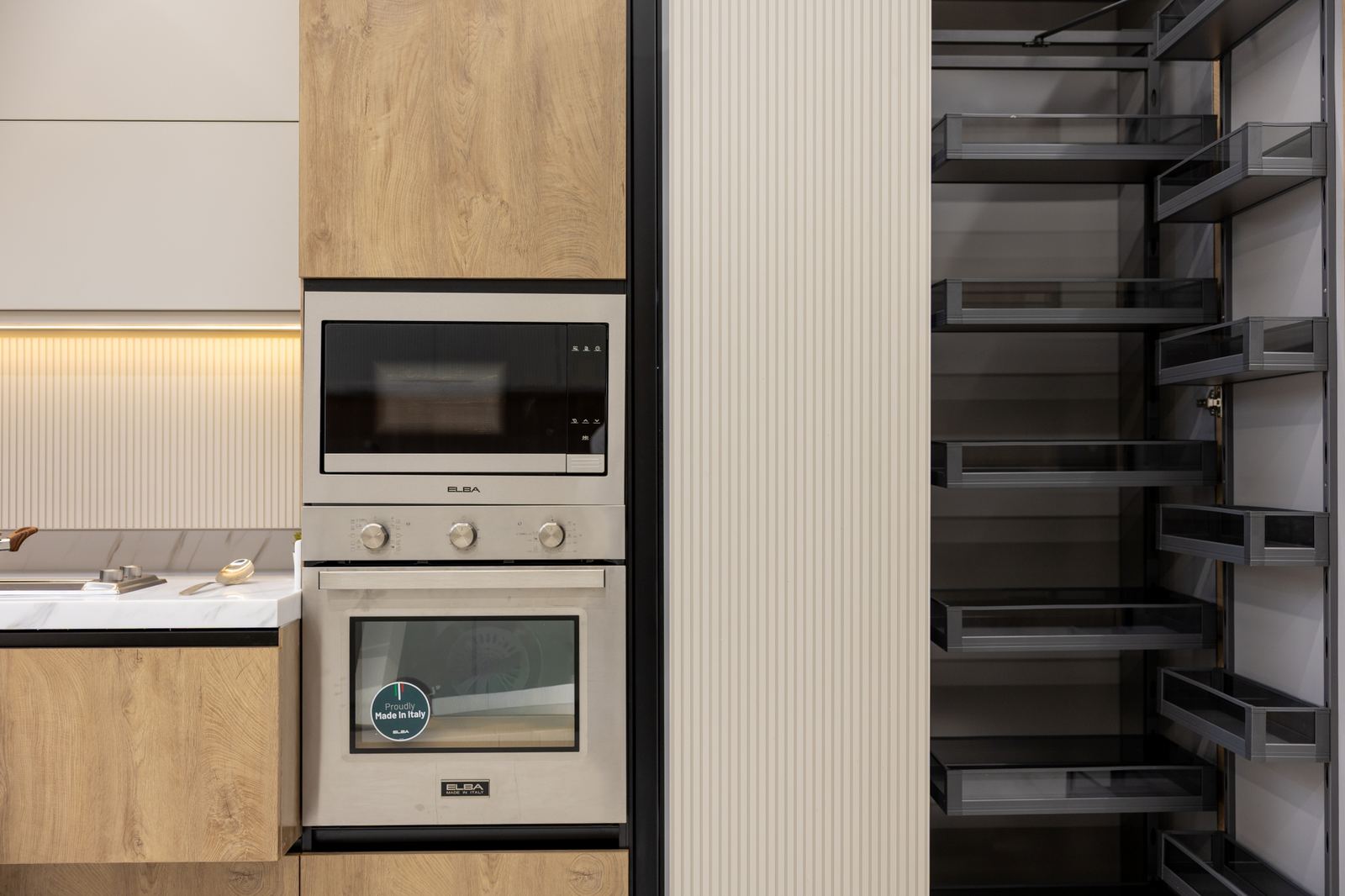
When comparing kitchen cabinets, do not begin with the number of cabinets. Begin with what you own: cookware, plates, hosting items, small appliances, cleaning products, and pantry goods. Good storage places each category where it naturally belongs in the work path.
Use drawers for heavy daily items
Pots, pans, lids, and containers usually work better in deep drawers. A drawer shows the full content and reduces bending, especially in kitchens used every day. Strong runners and internal dividers are more important than simply adding more space.
Wall cabinets are for lighter items
Do not place everything in wall cabinets. Use them for cups, lighter plates, or seasonal pieces depending on user height. If the ceiling is high, tall wall cabinets can hold seasonal storage while daily tools remain within easy reach.
Corners need an early decision
A kitchen corner can be useful or wasted. Before approving the design, ask whether the corner will use a rotating shelf, pull-out mechanism, or a simple divided solution. The goal is to avoid a deep space where tools disappear.
Separate the cleaning zone
Cleaning products, trash bags, sponges, and water filter items need a clear place near the sink, but they should stay separate from food and cookware. This detail improves organization and safety, especially in homes with children.
Test the storage in the showroom
When visiting Nano Kitchens, do not only look at the front. Open the drawer, test the hinge, ask about weight capacity, and imagine where your daily tools will go. The right cabinet plan reduces movement and keeps the kitchen organized on busy cooking days.
From planning to a suitable choice
For the next planning details, read Kitchen Accessories & Internal Cabinets: Practical Organization Guide for Drawers, Corners, & Larder and Kitchen Hinges and Drawer Runners: Comparing Motion Systems. Connect these decisions to Integrated kitchen solutions, and identify your preferred materials and appliances when discussing the layout.
Explore Nano kitchens for an overview of our design and installation services.