
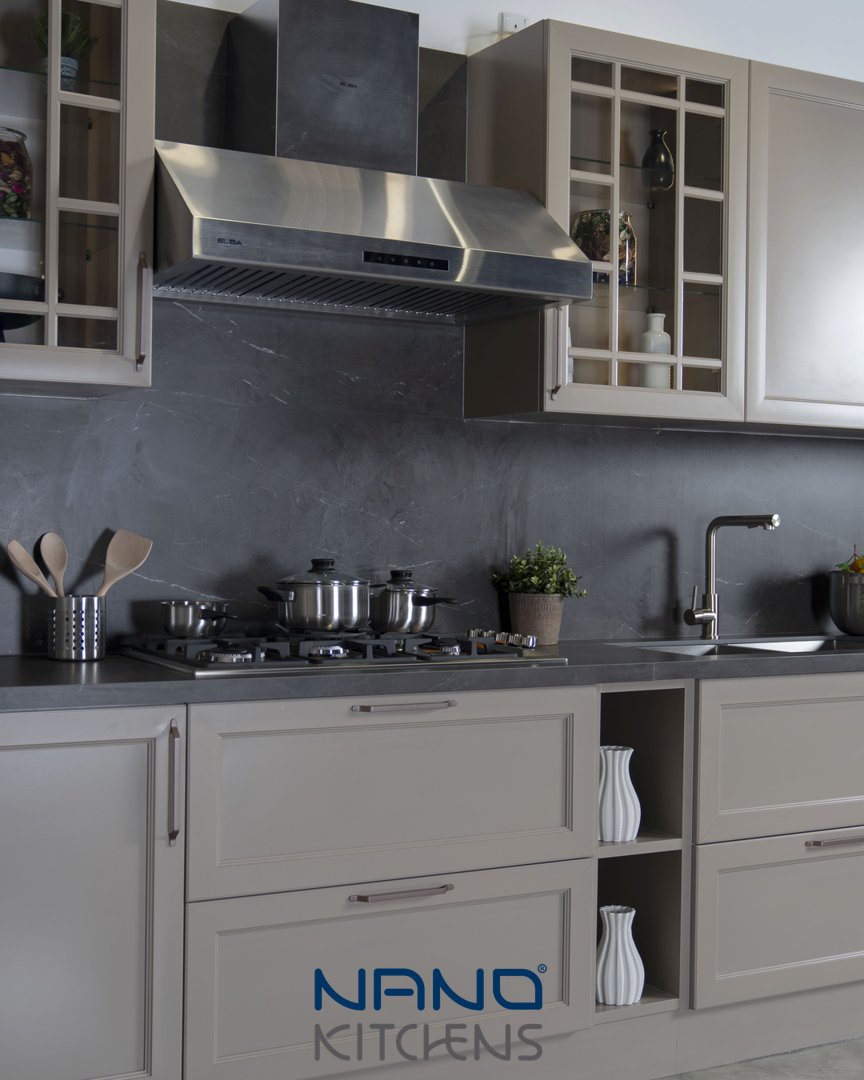
Review the hob, extractor and air outlet before approving the layout. Duct routing, appliance dimensions and installation requirements affect wall cabinets, lighting and storage. Coordinate them as part of the kitchen using the appliance instructions and the responsible ventilation specialist.
Why Early Planning Matters
If the hood is chosen after the cabinets are built, you may end up with visible ducting, cut panels, or a hood that does not align with the cooktop. Early planning sets the cabinet height, electrical point, duct route, and visual treatment from the start.
CFM Is Not the Whole Story
Ventilation references such as the Home Ventilating Institute range hood guidance show that hood performance depends on location, width, airflow path, and installation conditions. Long duct runs, many bends, or dirty filters can reduce real-world performance.
Hood Types
- Wall hood: works well when the cooktop is on a wall with a practical duct route.
- Integrated hood: keeps the cabinetry quiet visually but needs precise sizing.
- Island hood: requires stronger ceiling and duct planning because it is visible from all sides.
Cabinet and Material Impact
Steam and grease affect every kitchen when ventilation is weak. Aluminum cabinetry resists moisture and swelling better than many wood-based boxes, but good ventilation and routine cleaning still matter. Related guides: open kitchens and island kitchens.
From planning to a suitable choice
Connect these decisions to Integrated kitchen solutions, and identify your preferred materials and appliances when discussing the layout.
Explore Nano kitchens for an overview of our design and installation services.