
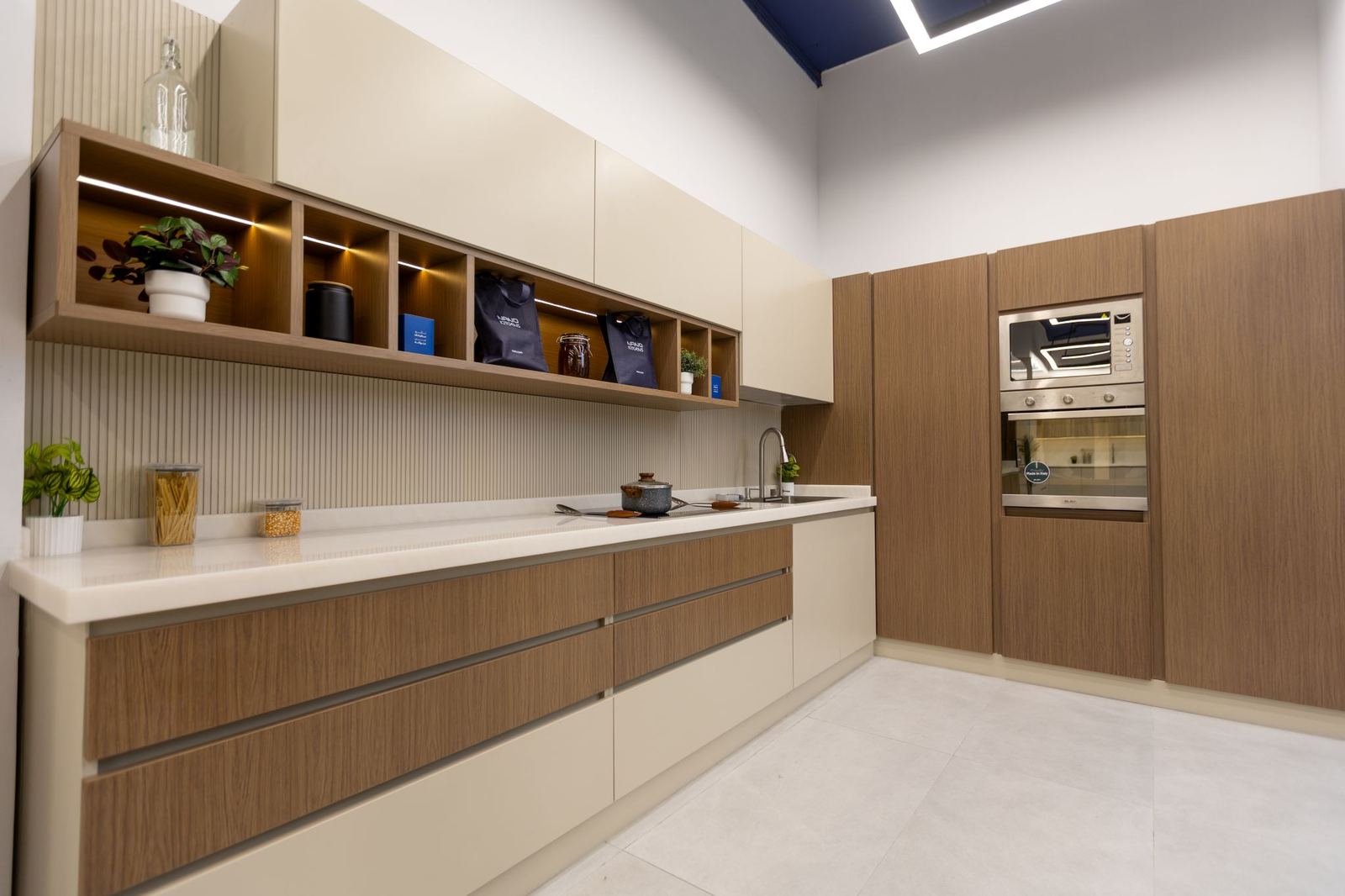
A custom kitchen is built around the home and the family’s use, not around a ready-made size. The first step is accurate measurement: walls, doors, windows, electrical points, water points, ceiling height, and hood location.
Choose appliances before cabinets
The refrigerator, oven, microwave, hood, and dishwasher affect cabinet sizes and movement. If appliances are chosen late, the design may need expensive changes or awkward gaps. Confirm dimensions early, then plan cabinets around them.
Material choice affects execution
Material is not only visual. Ask about moisture resistance, cleaning, color stability, edge quality, and hinge systems. In Saudi Arabia, inland heat and coastal humidity can create different needs, so material choice should match location and daily use.
Manufacturing and installation are connected
A design can look strong on screen, but its quality appears during installation. Floor level, wall angles, appliance openings, worktop joints, and finishing gaps all affect the final result.
What to bring to the showroom
Bring photos, approximate measurements, appliance lists, and references you like before you book a kitchen consultation. This helps Nano’s team turn the visit into an executable plan instead of a general style discussion.
Choosing the company matters
When comparing custom kitchen companies, also review the kitchen showroom visit checklist, ask about warranty, maintenance, internal systems, and completed work. A kitchen is a long-term part of the home, so it should work after installation, not only look good at handover.
From planning to a suitable choice
For the next planning details, read Aluminum Kitchen Costs in Saudi Arabia: Comparing Custom Quotes.
When installation is complete
Use the kitchen handover checklist to compare the installation with the approved layout, record observations and collect care instructions.
Explore Nano kitchens for an overview of our design and installation services.