
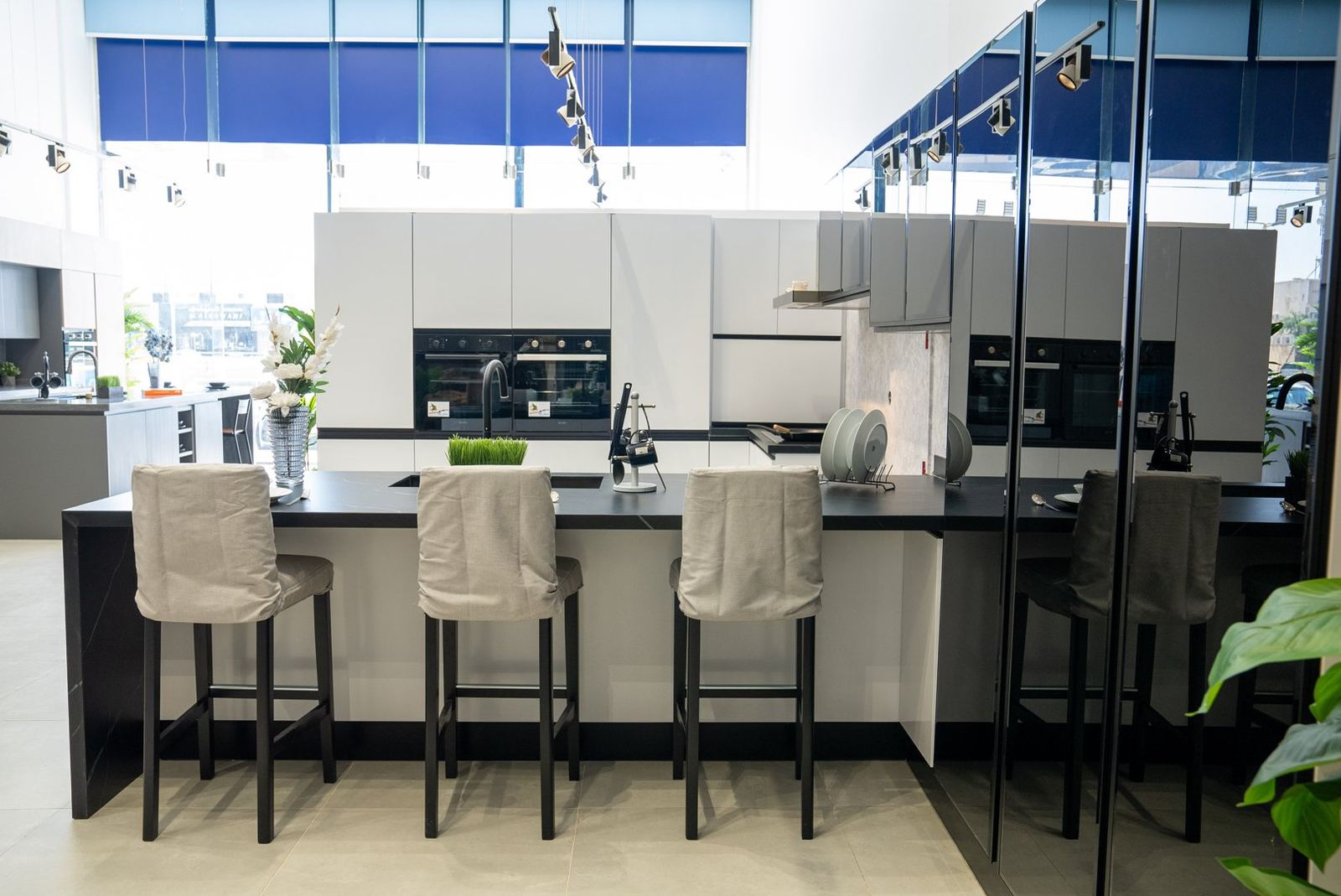
Modern kitchens are becoming quieter. Appliances disappear behind panels, storage extends floor-to-ceiling, handles become recessed, and lighting becomes part of the cabinetry. This approach suits Saudi homes that want an open kitchen connected to the living room, but it only works if the design answers one practical question: where does daily clutter go?
Quick Answer
A hidden kitchen succeeds when small appliances, coffee equipment, storage, heavy cooking, and maintenance access all have planned locations. Use full-height cabinetry, integrated appliances, calm fronts, built-in lighting, and the right handleless system, but never let concealed doors block ventilation or service access.
1. An Open Kitchen Is Not Just a Removed Wall
An open kitchen becomes part of the living room, so flooring, wall color, cabinet rhythm, and lighting should feel related. Successful open kitchens reduce exposed appliance surfaces and visual clutter. In Saudi homes, a show kitchen plus a closed service kitchen can be the most practical version of the trend. Read the open kitchen guide before committing.
2. Integrated Appliances Change the Whole Elevation
Panel-ready refrigeration, hidden dishwashers, and integrated hoods make the cabinet wall read as architecture. But every appliance still needs ventilation, door clearance, service access, and the correct power route. Confirm appliance dimensions before production.
For a quieter premium language, see the Italian-style modern kitchen guide.
3. Pocket Doors Are Useful but Not Free
Pocket or sliding doors can hide coffee stations, appliance garages, or prep counters. They also need side space, tracks, and durable hardware. Use them where they solve real clutter, not across every cabinet.
A good use case is a hidden coffee station with internal power, lighting, a practical surface, and cup storage. See the coffee corner guide.
4. Gola, J-Pull, or Push-to-Open?
Gola rails create strong architectural lines and a reliable grip for wide drawers. J-pull fronts feel simple and intuitive. Push-to-open gives the cleanest face but creates more touch points and is less ideal for heavy daily drawers. A zoned mix is usually best. For mechanics, read the motion systems guide.
5. Quiet Materials Still Need One Focal Point
Hidden kitchens are not personality-free. The focal point can be a stone surface, island color, warm metal, or internal lighting. Choose one hero and let other materials support it. For palette testing, read the Saudi kitchen color and material guide.
6. Integrated Lighting Makes the Kitchen Feel Architectural
Under-cabinet, shelf, and toe-kick lighting add depth and usability. Use aluminum LED channels to diffuse dots and manage heat. For Lux, Kelvin, and CRI, see the kitchen lighting science guide.
7. Where Does the Clutter Go?
Open kitchens need planned homes for blenders, air fryers, coffee bags, chargers, towels, cleaning tools, and daily dishes. Use tall larders, appliance garages, deep drawers, concealed pantry zones, or a separate service kitchen. Start with the internal storage and accessories guide.
Design It With Nano
Visit Nano showrooms to see calm aluminum fronts, Gola profiles, full-height cabinetry, and integrated lighting for hidden and open kitchens. Request the Nano catalog or book a design consultation.
Sources
- National Kitchen & Bath Association
- Houzz kitchen renovation research
- Illuminating Engineering Society
- Architectural Graphic Standards
- Francis D. K. Ching and Corky Binggeli, Interior Design Illustrated.
- Julius Panero and Martin Zelnik, Human Dimension and Interior Space.
From planning to a suitable choice
Connect these decisions to Modern kitchen designs, and identify your preferred materials and appliances when discussing the layout.