
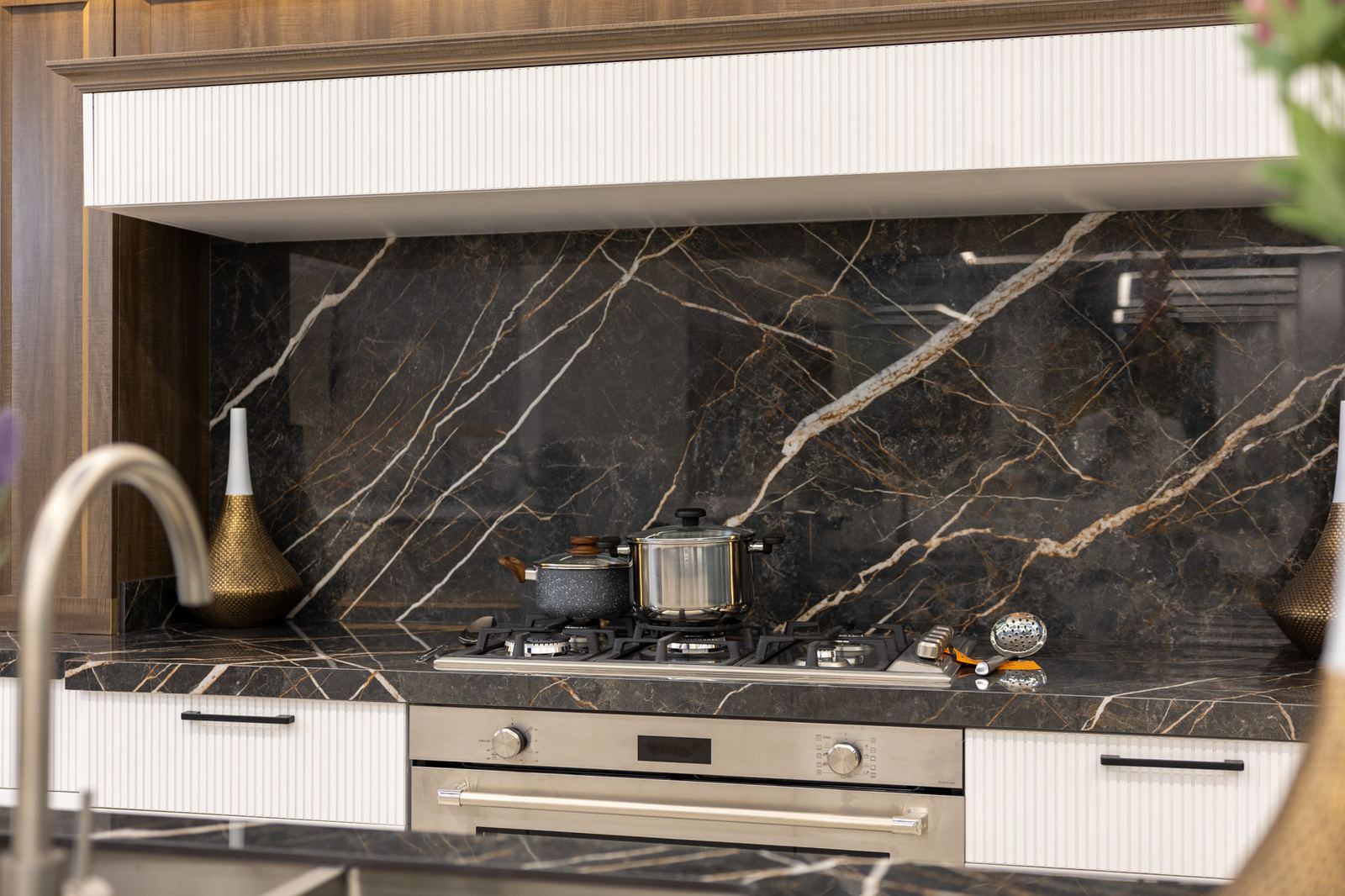
Most kitchen buying decisions begin with finishes, islands, and inspiration photos. The decisions that prevent future problems are less glamorous: where outlets sit, whether wet and hot zones are protected, whether the sink and dishwasher drain correctly, and whether the hood exhausts outdoors through a proper duct. This guide translates the research around Saudi residential kitchen compliance into a practical homeowner checklist before visiting Nano Kitchens showrooms.
Quick Answer
Before approving a custom kitchen, check five things: countertop outlets should be accessible and away from wet and hot zones; kitchen circuits should be planned for actual appliances; sink and dishwasher waste should be serviceable and correctly trapped; the hood should discharge outdoors through smooth metal ducting; and cabinets near the cooktop should respect appliance and safety clearances.
1. Countertop Outlets Are a Safety Layout Item
Countertop receptacles should not be treated as leftover wall details. They need to serve daily appliances without extension cords crossing the sink or cooktop. Saudi residential code research points to clear separation from sinks and cooking appliances, plus worktop-height placement that keeps outlets visible and reachable.
Bring your appliance list to the showroom: coffee machine, air fryer, blender, toaster, scale, and any island appliances. This lets the designer place outlets by workflow rather than guesswork. For broader planning, read the Saudi kitchen planning guide.
2. Electrical Protection Matters More Than Outlet Count
A kitchen needs appropriate circuits and protection for high-use and high-load appliances. Ovens, hobs, range hoods, dishwashers, and refrigerators should be located before cabinet production so ventilation, access, and maintenance are not blocked by the cabinetry.
If a built-in oven sits in a tall cabinet, service access and isolation need to be practical. If an island needs power, the route must be planned early. Use the showroom visit checklist before final approval.
3. Sink and Dishwasher Drainage Can Make or Break the Kitchen
The sink base is the wettest cabinet in the kitchen. Research around Saudi residential plumbing highlights the importance of practical waste sizing, correct slope, protected trap seals, and accessible service space. Do not fill the sink base with accessories that block access to the trap, supply valves, or dishwasher hose.
Dishwasher drainage needs special attention. A high-loop or approved backflow-prevention detail helps stop contaminated sink water from returning toward the dishwasher. Coordinate this with the internal cabinet and storage plan.
4. A Range Hood Is Not Just a Decorative Canopy
An effective hood removes moisture, grease, and cooking odor outdoors. Ask the ventilation specialist to confirm the duct material, air route, outlet and installation details against the appliance instructions and applicable building requirements. Flexible corrugated hose is easy to install but can collect grease, reduce airflow, and increase noise.
Cooktop-on-island layouts require early duct planning. If a straight outdoor path is not practical, a wall cooktop may outperform a more dramatic island hob. Read the kitchen ventilation and range hood guide before approving the cooking zone.
5. High-Capacity Hoods May Need Make-Up Air
Very strong hoods can pull large amounts of air out of a tightly sealed Saudi home. Research identifies about 720 m³/h as an important threshold for make-up air coordination. The practical lesson is simple: choose the hood based on cooking style, duct length, bends, noise, and pressure balance, not just the biggest airflow number.
6. Cooktop Clearances and Nearby Materials
Materials near the hob need to tolerate heat and cleaning. Cabinets, shelves, backsplashes, and hoods should respect the appliance manufacturer’s instructions and relevant safety clearances. This is where material durability, range hood planning, and cabinet detailing meet.
If you are still comparing finishes, start with the kitchen material comparison guide and the aluminum cabinet guide.
Approval Checklist
| Item | Question | Why It Matters |
|---|---|---|
| Outlets | Are they away from the sink and hob? | Reduces water, heat, and extension-cord risk. |
| Appliances | Does every appliance have power, ventilation, and service access? | Prevents cutting finished cabinets later. |
| Sink | Can the trap and valves be reached? | Improves leak and odor control. |
| Dishwasher | Is the drain hose routed safely? | Reduces backflow risk. |
| Hood | Does it exhaust outdoors through smooth ducting? | Removes grease and odor properly. |
| Cooktop | Are clearances and backing materials suitable? | Improves fire safety and cleaning durability. |
Plan It With Nano
Before visiting Nano showrooms, photograph the walls, water points, electrical points, and hood outlet. Bring appliance dimensions if available. You can also request the Nano catalog or book a measurement and design consultation.
Sources
From planning to a suitable choice
Connect these decisions to Integrated kitchen solutions, and identify your preferred materials and appliances when discussing the layout.
Explore Nano kitchens for an overview of our design and installation services.